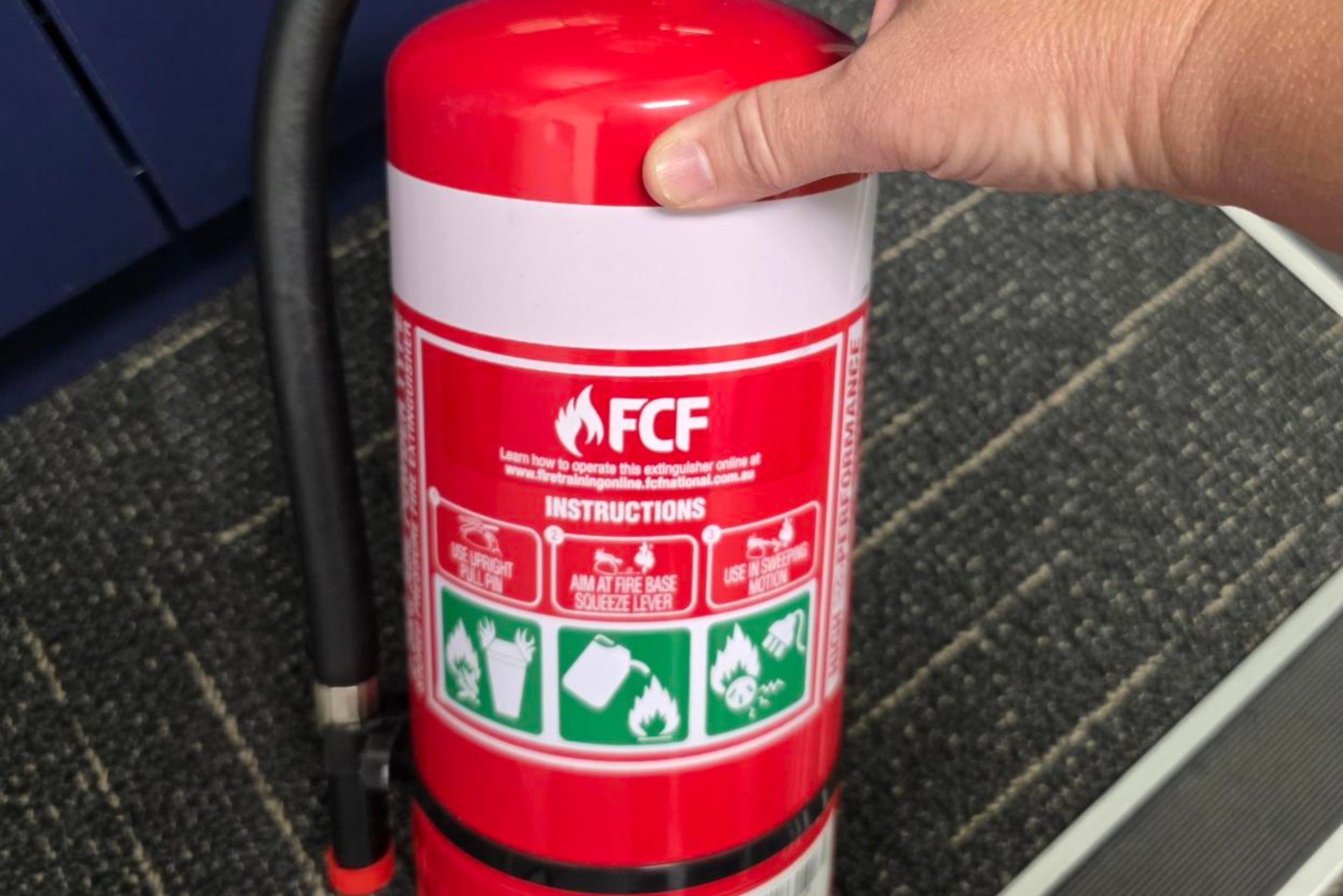
ABE vs BE Fire Extinguishers, understanding the difference is important when choosing the right fire protection for your workplace. ABE and BE dry chemical fire extinguishers are commonly used throughout Australia, and while they may look similar, they are designed to tackle different classes of fire. Choosing the correct type can be critical for protecting people and property. In this guide, we explain the key differences between ABE and BE fire extinguishers, where each type should be used, and how to determine which one is right for your needs.
What Do ABE vs BE Fire Extinguishers Mean?
The letters on fire extinguishers refer to the classes of fire they are designed to combat:
- Class A – Ordinary combustibles (wood, paper, plastics)
- Class B – Flammable liquids (petrol, oils, solvents)
- Class E – Energised electrical equipment
ABE Extinguishers
ABE extinguishers are suitable for:
- Class A fires
- Class B fires
- Class E fires
BE Extinguishers
BE extinguishers are suitable for:
- Class B fires
- Class E fires only
(Not suitable for Class A fires)
Key Differences Between ABE and BE Extinguishers
1. Fire Coverage
- ABE: Covers a wider range of fire types, including solid materials
- BE: Limited to flammable liquids and electrical fires
2. Chemical Composition
- ABE: Uses a monoammonium phosphate powder that can form a crust on Class A fires to prevent re-ignition
- BE: Uses a different dry chemical powder designed specifically for liquid and electrical fires
3. Applications
- ABE: General-purpose use in offices, warehouses, retail spaces, and vehicles
- BE: More suited to specialised environments such as workshops, fuel storage areas, and industrial sites
Which One Should You Use?
The correct extinguisher depends on the risks present in your environment:
Choose ABE if:
- There are combustible materials like paper, wood, or packaging
- You need a versatile, general-purpose extinguisher
- You’re covering multiple fire risks in one area
Choose BE if:
- The primary risk is flammable liquids or fuels
- There are minimal or no Class A materials present
- You are in a specialised industrial or hazardous environment
In many cases, ABE extinguishers are the most common choice due to their versatility.
Importance of Correct Selection
Using the wrong type of extinguisher can:
- Be ineffective against the fire
- Increase the risk of fire spread
- Create additional hazards
- Lead to compliance issues
Correct selection and placement are essential for both safety and regulatory compliance.
Inspection and Maintenance Requirements
Both ABE and BE extinguishers must be:
- Regularly inspected and tested
- Easily accessible and clearly visible
- Installed in the correct locations
- Serviced in accordance with Australian Standards (AS 1851)
Routine maintenance ensures extinguishers will operate correctly in an emergency.
How FCF Fire & Electrical Brisbane Can Help
At FCF Fire & Electrical Brisbane, we provide:
- Expert advice on extinguisher selection
- Supply and installation of ABE and BE extinguishers
- Routine inspection and maintenance
- Compliance reporting and documentation
- Integration with your broader fire safety plan
We ensure your fire protection equipment matches your actual risk.
Get the Right Protection for Your Workplace
Understanding the difference between ABE vs BE fire extinguishers is key to protecting your people and property. With the right equipment in place, you can respond effectively to a fire emergency.
If you need assistance selecting or maintaining fire extinguishers, contact FCF Fire & Electrical Brisbane today. Our team is ready to help you stay safe and compliant.
Whether you’re reviewing existing fire protection equipment or fitting out a new workplace, selecting the right extinguisher should always be based on the specific fire risks present. Our experienced Brisbane fire safety team can assess your premises and recommend the appropriate ABE vs BE fire extinguishers, helping ensure your equipment is correctly positioned, maintained and ready when it matters most.